Product Inquiry
Roofed Enclosure Requirements for California Properties
Article Summary
- California is expanding the requirements for roofed dumpster enclosures. Use local municipal codes to determine if a roofed enclosure is required for your project
- Reasons for these new requirements include aesthetics, stormwater management, or security.
- Choosing a pre-engineered roofed enclosure solution can streamline the local approval process
California Codes Put Roofs on the Plan
As local requirements continue to evolve, more municipalities along the west coast are now requiring roofed dumpster enclosures. Reviewing local ordinances early helps architects identify what approving authorities expect. The following municipalities have already adopted requirements for roofed enclosures:
- Calabasas: Municipal Code §17.20.200 requires a permanent, waterproof, noncombustible roof that overhangs the enclosure for applicable new developments.
- Vallejo: Municipal Code §16.501.08 requires a roof structure for outdoor solid-waste storage areas.
- Suisun City: Municipal Code §8.08.200 requires roofs except for enclosures within gated buildings or communities, with no gap between walls and roof.
- Richmond: Municipal Code §15.04.601.090 Solid waste and recycling storage areas located outside or on the exterior of any building must be screened with a solid enclosure at least six feet high and include a roof structure.
- Los Angeles County: Municipal Code 22.132.030 may require roofs to screen the dumpster enclosure from views down from upper-story windows in adjacent residential or mixed-use buildings.
Find out if your project requires roof screening: https://library.municode.com/ca
Understanding Local Design Requirements
The most popular reasons for requiring roof are aesthetic improvement, security, and storm water management. Understanding these requirements can determine what solution would be best for your project. Most common options are CMU block wall with a roof provided by a steel fabricator or a modular roofed enclosure system.
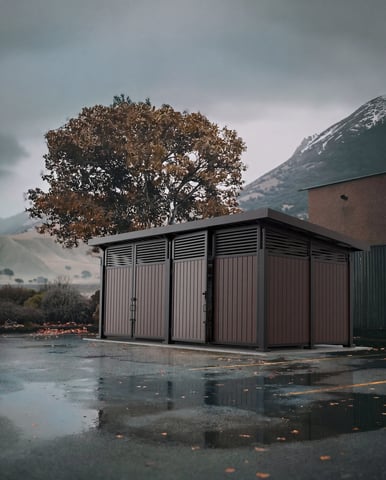
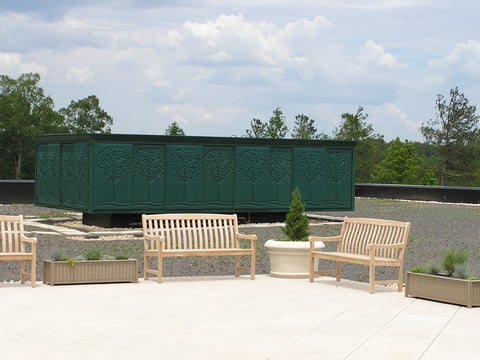
Aesthetic Improvement: Covrit® Roofed Enclosures offer design flexibility that traditional concrete block structures may not. With customizable infill materials, colors, textures, and gate configurations, architects can coordinate the enclosure with the surrounding building. Consult your local municipal codes and local design guidelines to determine what enclosure materials and finishes are approved in the area.
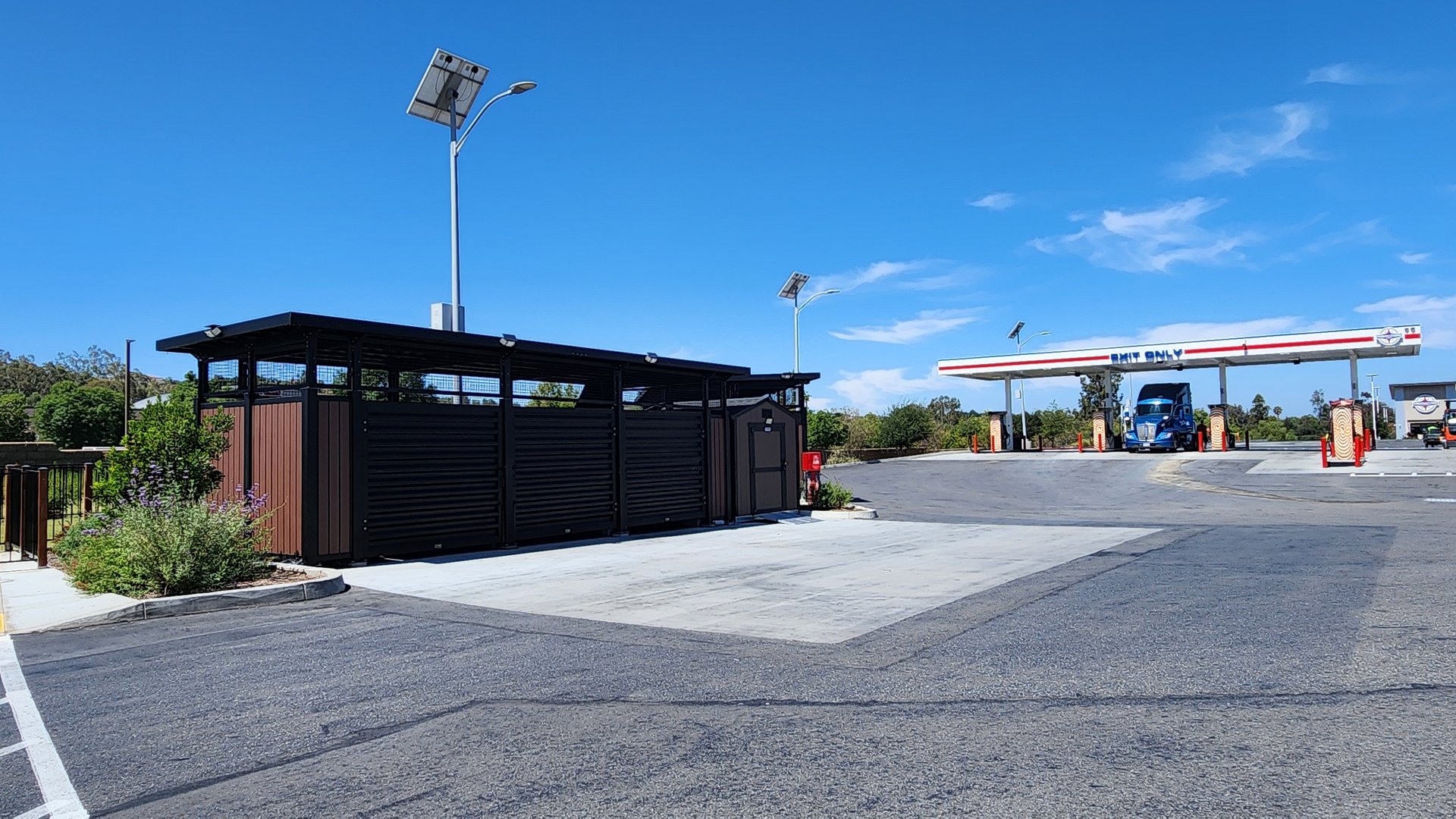
Security: A common concern of property manager is people throwing garbage bags over the top rail of an enclosure or trespassing. Modular roofed enclosures offer the option increase security by adding a Transom, a panel that closes the gap between the top rail of the enclosure and the bottom of the roof.
Stormwater: Rainwater entering waste areas can carry debris, residue, and other pollutants into storm drains. A properly designed roof limits precipitation contact with waste containers and supports stormwater management goals. A modular roofed enclosure with an integrated gutter system can help direct runoff to a drain to prevent standing water.
Specify With California Permitting in Mind
Before selecting commercial property enclosures, confirm local requirements for wall materials, structural loads, roof clearance, drainage, fire access, and waste collection operations. Covrit® modular Roofed Enclosures offer a fully customizable and stormwater-conscious starting point. With pre-engineered solutions and architectural resources for local review, commercial roofed enclosures can support quick project approval while delivering a cohesive architectural design.
Planning a California commercial project? Explore Covrit Roofed Enclosures and connect with CityScapes to discuss your specifications.